
Tuesday, April 1, 2014
LAD #37: Brown v. Board of Education
Brown v. Board of Education stands as one of the most influential court cases in American history. It challenged the principle of "separate but equal" segregation in the area of public schooling. The case represented a young black girl by the name of Linda Brown, who had to walk a long distance to her black school while a white school was much closer. The National Association for the Advancement of Colored People (NAACP) defended her and Brown went to court with the case. The principle idea raised was that black students could not learn as well when they were segregated. The NAACP said that it fostered a feeling of inferiority that could disrupt a child's learning. Despite claims from the Board of Education that many black students had overcome this and made a name for themselves, the Supreme Court ultimately ruled in favor of Brown and overturned the "separate but equal" segregation principle in the area of public schooling. Brown v. Board of Education took one of the first steps towards desegregation in America by desegregating public schools.

Monday, March 24, 2014
LAD #36: Truman Doctrine
The Truman Doctrine effectively began the Cold War. The Soviet Union was expanding into what was known as the Soviet Sphere, or the small countries around the Soviet Union which were under the nation's control. In an effort to combat this, President Truman issued the Truman Doctrine, which pledged economic and military aid to Greece and Turkey so that they would not fall to Communism.
The Truman Doctrine evolved to form the basis of the United States' foreign policy during the Cold War. Truman believed in protecting all nations who resisted the influence of Communism. This foreign policy was known as Containment because the primary goal of America was to contain the spread of Communism and restrict the Soviet Union's power as much as possible.
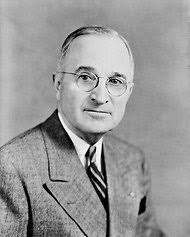
The Truman Doctrine evolved to form the basis of the United States' foreign policy during the Cold War. Truman believed in protecting all nations who resisted the influence of Communism. This foreign policy was known as Containment because the primary goal of America was to contain the spread of Communism and restrict the Soviet Union's power as much as possible.
Sunday, March 16, 2014
LAD #35: FDR's Executive Order #9066
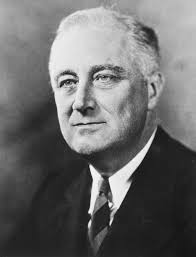
Executive Order #9066 came about during World War II. At this time, Americans were skeptical of Japanese Americans living in America. The Japanese had bombed Pearl Harbor on December 7th, 1941, and this created a resounding fear and anger towards any Japanese man or woman. This fear and anger helped bring about Executive Order #9066. The Order allowed for the creation of "military areas". With these new "military areas", people could be sent there to live and others could be forbidden to enter, stay, or exit. In other words, it was now legal to send men and women to secluded areas. These "military areas" would eventually lead to the holding of many Japanese men and women.

LAD #34: FDR's Declaration of War
FDR's Declaration of War was incredibly effective. Not only did he have the audience of Congress, but his speech was also broadcast throughout the United States and was the most-listened-to broadcast to date. FDR opens with the immortal words, "a date which will live in infamy."
He goes on to explain that not only did the Japanese intentionally deceive the United States prior to their attack, but the Pearl Harbor assault was only a part of a massive offensive across the Pacific. FDR closes by stating his faith in America and his belief that the country will endure and overcome all odds through sheer effort and force of will. Finally, he asks that Congress give him the Declaration of War against the Japanese.

He goes on to explain that not only did the Japanese intentionally deceive the United States prior to their attack, but the Pearl Harbor assault was only a part of a massive offensive across the Pacific. FDR closes by stating his faith in America and his belief that the country will endure and overcome all odds through sheer effort and force of will. Finally, he asks that Congress give him the Declaration of War against the Japanese.
Tuesday, March 4, 2014
LAD#32: Kellogg Briand Peace Pact
The Kellogg Briand Peace Pact was signed by the United States, Japan, and a better portion of Europe in the late 1920's in which each nation recognized its solemn duty to promote the general welfare of mankind. The Pact stated that the renunciation of war ought to be used as a national policy in order to bring about peace and order. With the signing and passage of this pact, any nation that wished to declare war in pursuit of its own interest would be denied the benefits as decreed by the treaty. It was the hope of those who signed the treaty that future generations would follow this example.

Wednesday, February 12, 2014
LAD #30 Schenck vs. US
Schenck decided to send out a message to the public that they peacefully resist the Conscription Act in place during the Great War. As a result, he was charged with the violation of the Espionage Act due to his obstruction to recruitment. Holmes declared that Schenck's words were not protected under the First Amendment because of the circumstances. The United States was at war, and therefore could not afford Schneck's actions because they caused a "clear and present danger" to the United States. The government feared people would follow Schenck's orders and disobey the government. This case essentially established that Congress had the right to limit free speech during wartime as deemed necessary.

Sunday, February 9, 2014
LAD #28: Keating-Owen Child Labor Act
As Lewis Hine and other muckrakers traveled across the country documenting employers violating their workers and especially children, many called for action. In 1900 2 million children were employed under dangerous conditions. The Keating-Owen Child Labor Act of 1916 was created to limit child labor. It banned the sale of products made by children under the age of 14, from mines employing under 16, and businesses working children at night or over 8 hours per day. Unfortunately the Supreme Court overturned the act because Congress did not have the right to regulate interstate commerce. After this act was approved of by President Wilson, it was declared unconstitutional due to the case Hammer v. Dagenhart. Change regarding child labor took a long time despite public support, and the cruel treatment of children at the factories and mines continued. The Supreme Court reversed its opinion in Hammer v. Dagenhart in 1941.

LAD #28: Wilson's First Inaugural
In Wilson's First Inaugural address he addresses the fact that the Democrats have a complete majority in the country and what it will mean for our country. This change in the government will mean a fresh outlook on the governing of America. He states that Americans are lucky to live where they do because nowhere else in the world can you find people with as great moral force, especially in a time when there were many issues resulting from industrialization. However, he also states that there are some evils that come along with the good in the country. He states that we need to preserve our natural resources because our industrial achievements have come with an expense. He states that before the government was in a dark time and did not do anything to fix it. Now however, it is our duty to fix these problems to restore the country. He ultimately states that we need to consequences of our actions in industries in order to benefit the country.

LAD #27: Clayton Anti-Trust Act
The Clayton Antitrust Act was enacted in 1914 by Congress. It's purpose was to strengthen the Sherman Antitrust Act of 1890, which set out to regulate unfair monopolies. The previous act was left widely up to interpretation, which allowed many sneaky businessmen to find loopholes and get around the law. The Clayton Antitrust act helped manage monopolies and put many restrictions on big businesses. That way, no one corporation could take over the entire industry. This act ensured that businesses could not practice price discrimination. This meant they must give the same price for their products to all customers. Businesses could not discriminate from one customer to another. Next, the act says that no one can acquire all or part of the stock share of a business. Lastly, the act permits any individual or business to go to court for violation the Antitrust laws. This way, government could surely keep business and monopolies regulated.

Monday, January 20, 2014
LAD #26: MLK's 'I Have a Dream' Speech
Martin Luther King Junior's 'I Have a Dream' speech is easily one of the most known speech in America. He starts off by referencing Lincoln and the Emancipation Proclamation when the slaves were set free. Then he states that 100 years later, African Americans are still being discriminated against and not able to live completely free lives. He then continues explaining all the bad things that African Americans go through, and says now is the time to do something about it. He explains that African Americans will not keep living in these conditions and will not stop until justice is served. He says that they will not turn to physical violence but they will not stop until they are given their complete freedom. He then talks about the dream he has for the country, the dream that one day nobody will be judged by their skin color but by their character. He dreamed that one day blacks and whites would live together in peace.

Sunday, January 19, 2014
LAD #26: Cross of Gold Speech
William Jennings Bryan, a democrat from Nebraska, gave the speech called the “Cross of Gold” and after this speech was given in 1896 Bryan was nominated to run as a candidate for the 1896, 1900 and 1908 elections by the democratic national convention. Bryan spoke in favor of a highly controversial topic in the United States: Bimetallism, the idea that both gold and silver should be coined instead of just gold. It would be the speech that would rocket him into the presidential nomination for the Democratic party. Bryan states that the Democrats are using this speech only to make public their position of the topic so that those who agree with their position may join them. Bryan supports the bimetallism because he supported more of the common man and the farmer who would benefit from it.

LAD#26: Populists Party Platform
The Populists Party Platform started in the 1890's as a third party for the working man. It was strongly opposed to the big business, banking system, and corruption that was taking over America. They worked to create equality in America and tried to decrease the large gap between the rich and the poor. One of the main goals of the platform was to increase the standard of living for factory workers and to get the bread and butter of the labor, better conditions, better hours, better pay. They believed the government should play a role in the railroad companies and increase income taxes. The party was all for the common man and favored labor unions.

LAD #25: Dawes Act
The Dawes Act was made to re-organize and redistribute reservation land into land for individual Indians, their own private property. Native Americans 18 and above, including orphans, got 1/8 of a piece of land, while adults in charge of a family will get 1/4th- of which they could stay on or sell. The land is supposed to be used to produce crops or for animals to graze. Dawes Act also includes laws for the reservation- Indians can apply to become American citizens and work for the government. The land, if there is not enough, is divided by a class system and also by an agent, who would give out patents of ownership. Indians who don't live on reservations can ask and apply for land. Once they've stayed on the land for five years, the land is forever theirs.

Thursday, January 9, 2014
LAD #22: McKinley's War Message
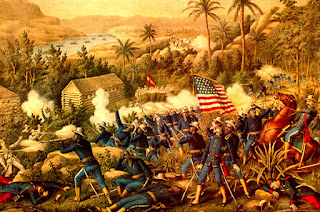
McKinley stated to congress that the war between Cuba and Spain was now affecting the American citizens. He stated that the people were shocked by the atrocities taking place in the war. In addition, it was affecting the American economy as well. The United States had a large amount of trade with Cuba and the war that was going on was damaging the trade relations. McKinley goes on to say that the war has dragged on for three years and there is still no clear winner yet. He thought that it was necessary for the United States to either act as a neutral nation to help solve the problem, or act as a military ally to one of the countries. McKinley believed the U.S. needed to intervene because we needed to stop the bloodshed, we needed to protect the citizens of Cuba, protect our trade, and protect our own government and freedom.
Wednesday, December 11, 2013
LAD #21: Carnegie's Gospel of Wealth
Carnegie begins by asserting the development of society that has centralized wealth in the hands of few, whose mansions rise above everyone's cottages. The centralization of this wealth was actually for the good, so we would not all be poor and the rich can remain rich as long as they help society through three modes of contribution. His first mode would be leaving it to your family which to Carnegie was not ideal since it actually put a burden on their family on what to do with their wealth. Another is to give all your money to society only when you are dead, which shows that you were too selfish in society to make donation. The ideal mode of contribution would be to make public donations during your lifetime while he also supported death taxes on estate.

Monday, November 25, 2013
LAD #2:Emancipation Proclamation
In this Doctrine, which went into effect on December 2, 1823, was a statement made by the United States to all of the European powers. In this statement, the Untied States said that none of the European powers were to try and colonize any far of the New World from here on in. The United States, along with Russia and Great Britain believed that it was time for the European powers to end their colonial ventures in the new world and to keep their affairs domestic. The U.S urged that an attempt to colonize nations in the New World would present a threat to American security and the Americans would take appropriate action. The United States recognized many nations such as Mexico and Chile and bolstered a new era of Independence in the New World.

LAD #19: Lincoln's Second Inaugural Address
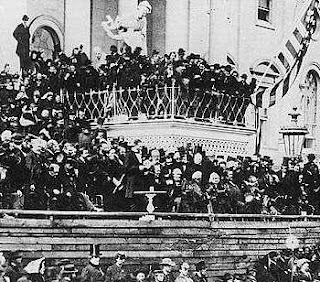
Lincoln starts off his Second Inaugural Address there is less occasion for him to have a lengthy speech because he was already president once and they were already well into the Civil War. He then goes on to talk about his previous Inaugural Address and how it was before the impending Civil War. He also says the South would've make war than let the nation survive and the North would rather accept war than let it perish. He then talks about how 1/8 of the population is slaves in the South and that he only seeks to contain them. He states that no side predicted how bloody and hard fought this battle would be. He incorporates religion and says that God's will can determine the end of the war even though both sides want it to end. He ends this speech by saying we need to finish our work and create an "everlasting peace."
Wednesday, November 20, 2013
LAD #18: Dred Scott Decision
At the Scott v. Sanford the court was overlooking the larger issues of negro citizenship and disagreement over the Missouri Compromise so they changed the chief justice from Justice Nelson to Roger Taney. Taney did a better job than Nelson who focused on his opinion rather than the opinion of the majority. Taney stated that because they have negro ancestors that were sold to the country as slaves, even if they are free in the country they can not be considered citizens and not have the rights of a citizen. So this meant that Scott does not have a right to a court because he wasn't a citizen. He then moves to the Missouri Compromise stating that it is unconstitutional because in every state, citizens are guaranteed life, liberty, and property. Since slaves were considered property this essentially made slavery legal in all U.S. states. He concluded the case wrapping up what he just said and adding that Dred Scott was a slave in any state so the court ruled in favor of Sanford.

Tuesday, November 19, 2013
LAD #17: Ain't I a Woman?
Sojourner Truth speech Ain't I a Woman touches on the fact that slaves, and especially slave women, are treated so much more poorly than whites. She starts off by saying that white women are suppose to be treated kindly and have the best place but no one has ever helped her. She explains how she is treated very poorly because she is the lowest class citizen being a slave and a woman. She than says that people say women can't have as many rights as man because Christ was a man, but Christ was born from a woman so man had nothing to do with Him. She ends with saying women are strong enough to turn the world upside down.


LAD #16: 5th of July Speech
Frederick Douglass starts off his speech referring to himself as what instead of who, symbolizing how he was thought of as property and not a person. He goes on to say who is he to say that the terrible practices such as beating men with sticks, hunting them with dogs, and selling them at auctions is wrong. He says he has better things he can do than list all the things slavery does that is wrong. He then goes on to explain that on the Fourth of July the true hypocrisy of our nation is brought out and that the celebration is a sham. He says that we celebrate freedom and equality in our country when we are really savages who are enslaving people. He then ends with saying that there is no other place in the world that commits a more barbaric act than the people in the United States.

Subscribe to:
Posts (Atom)