
Sunday, March 16, 2014
LAD #35: FDR's Executive Order #9066
Executive Order #9066 came about during World War II. At this time, Americans were skeptical of Japanese Americans living in America. The Japanese had bombed Pearl Harbor on December 7th, 1941, and this created a resounding fear and anger towards any Japanese man or woman. This fear and anger helped bring about Executive Order #9066. The Order allowed for the creation of "military areas". With these new "military areas", people could be sent there to live and others could be forbidden to enter, stay, or exit. In other words, it was now legal to send men and women to secluded areas. These "military areas" would eventually lead to the holding of many Japanese men and women.
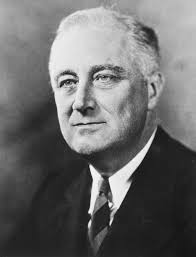

LAD #34: FDR's Declaration of War
FDR's Declaration of War was incredibly effective. Not only did he have the audience of Congress, but his speech was also broadcast throughout the United States and was the most-listened-to broadcast to date. FDR opens with the immortal words, "a date which will live in infamy."
He goes on to explain that not only did the Japanese intentionally deceive the United States prior to their attack, but the Pearl Harbor assault was only a part of a massive offensive across the Pacific. FDR closes by stating his faith in America and his belief that the country will endure and overcome all odds through sheer effort and force of will. Finally, he asks that Congress give him the Declaration of War against the Japanese.

He goes on to explain that not only did the Japanese intentionally deceive the United States prior to their attack, but the Pearl Harbor assault was only a part of a massive offensive across the Pacific. FDR closes by stating his faith in America and his belief that the country will endure and overcome all odds through sheer effort and force of will. Finally, he asks that Congress give him the Declaration of War against the Japanese.
Tuesday, March 4, 2014
LAD#32: Kellogg Briand Peace Pact
The Kellogg Briand Peace Pact was signed by the United States, Japan, and a better portion of Europe in the late 1920's in which each nation recognized its solemn duty to promote the general welfare of mankind. The Pact stated that the renunciation of war ought to be used as a national policy in order to bring about peace and order. With the signing and passage of this pact, any nation that wished to declare war in pursuit of its own interest would be denied the benefits as decreed by the treaty. It was the hope of those who signed the treaty that future generations would follow this example.

Wednesday, February 12, 2014
LAD #30 Schenck vs. US
Schenck decided to send out a message to the public that they peacefully resist the Conscription Act in place during the Great War. As a result, he was charged with the violation of the Espionage Act due to his obstruction to recruitment. Holmes declared that Schenck's words were not protected under the First Amendment because of the circumstances. The United States was at war, and therefore could not afford Schneck's actions because they caused a "clear and present danger" to the United States. The government feared people would follow Schenck's orders and disobey the government. This case essentially established that Congress had the right to limit free speech during wartime as deemed necessary.

Sunday, February 9, 2014
LAD #28: Keating-Owen Child Labor Act
As Lewis Hine and other muckrakers traveled across the country documenting employers violating their workers and especially children, many called for action. In 1900 2 million children were employed under dangerous conditions. The Keating-Owen Child Labor Act of 1916 was created to limit child labor. It banned the sale of products made by children under the age of 14, from mines employing under 16, and businesses working children at night or over 8 hours per day. Unfortunately the Supreme Court overturned the act because Congress did not have the right to regulate interstate commerce. After this act was approved of by President Wilson, it was declared unconstitutional due to the case Hammer v. Dagenhart. Change regarding child labor took a long time despite public support, and the cruel treatment of children at the factories and mines continued. The Supreme Court reversed its opinion in Hammer v. Dagenhart in 1941.

LAD #28: Wilson's First Inaugural
In Wilson's First Inaugural address he addresses the fact that the Democrats have a complete majority in the country and what it will mean for our country. This change in the government will mean a fresh outlook on the governing of America. He states that Americans are lucky to live where they do because nowhere else in the world can you find people with as great moral force, especially in a time when there were many issues resulting from industrialization. However, he also states that there are some evils that come along with the good in the country. He states that we need to preserve our natural resources because our industrial achievements have come with an expense. He states that before the government was in a dark time and did not do anything to fix it. Now however, it is our duty to fix these problems to restore the country. He ultimately states that we need to consequences of our actions in industries in order to benefit the country.

LAD #27: Clayton Anti-Trust Act
The Clayton Antitrust Act was enacted in 1914 by Congress. It's purpose was to strengthen the Sherman Antitrust Act of 1890, which set out to regulate unfair monopolies. The previous act was left widely up to interpretation, which allowed many sneaky businessmen to find loopholes and get around the law. The Clayton Antitrust act helped manage monopolies and put many restrictions on big businesses. That way, no one corporation could take over the entire industry. This act ensured that businesses could not practice price discrimination. This meant they must give the same price for their products to all customers. Businesses could not discriminate from one customer to another. Next, the act says that no one can acquire all or part of the stock share of a business. Lastly, the act permits any individual or business to go to court for violation the Antitrust laws. This way, government could surely keep business and monopolies regulated.

Subscribe to:
Posts (Atom)